

How to Trust Your Instincts as a Caregiver
Something feels off, but we’re not sure what. Does the strange behavior our family member just displayed mean something? Should we mention it to the doctor? How do we know when it’s time to say something?
This can be a sensitive and uncertain place to sit. We don’t want to offend our loved ones or make them feel self-conscious. But more often than not, it’s our gut, rather than our knowledge, that alerts us to subtle changes in their health or behavior.
Let me share a moment that’s stayed with me:
It was early spring when my mother and I were driving back to her house after spending the day together. As we drove, she began to tell me a story about a time she and my father had driven this same road. She said she’d been the one driving, and he had wanted her to pass a semi-truck. Apparently, he got mad at her for not passing fast enough, and she got angry at him for telling her what to do.
At least, I think that’s what she was trying to say.
The story was disjointed, and she struggled to find the right words. The rhythm of her speech was off, and her usual ease with storytelling just wasn’t there. I found myself trying to piece it together, finishing her sentences, and wondering why this familiar story suddenly felt unfamiliar, because of how she was telling it. During this story, she frequently shook her head as if to remove whatever was blocking her from saying her words. It reminded me of shaking an Etch-A-Sketch to clear the screen.
It was a small moment. But it stayed with me.
That moment was the beginning of a shift. And in hindsight, it was an important early sign that something neurological was changing.
As caregivers, we often witness the kinds of subtle changes that no one else sees. That’s why our observations matter. Closely noticing our loved one’s behavior, and approaching what we see with curiosity, not fear or judgment, can give us the insight we need to speak up when something isn’t quite right.
Spending time with them in both familiar and unfamiliar situations allows us to see how they navigate their world. But we must do this gently. Watch for body language that tells us they’re aware of our scrutiny and feel self-conscious. Our goal isn’t surveillance, it’s connection and clarity.
If your instincts are telling you something is off, ask yourself:
- What did I observe? Was this behavior unusual? In what way? How did my body react?
- How often has this occurred?
- What time of day did it happen? Was it at a time when they’re usually more tired or distracted?
- Was my family member tired? Hungry? In pain? Could another factor have influenced the behavior?
These questions can help you prepare to communicate clearly with their doctor. Medical professionals rely on detailed, concrete examples to understand what’s going on, and you may be the only one who can provide that clarity.
Above all, trust yourself. Your attention, your care, and your presence in your loved one’s life are already making a difference.
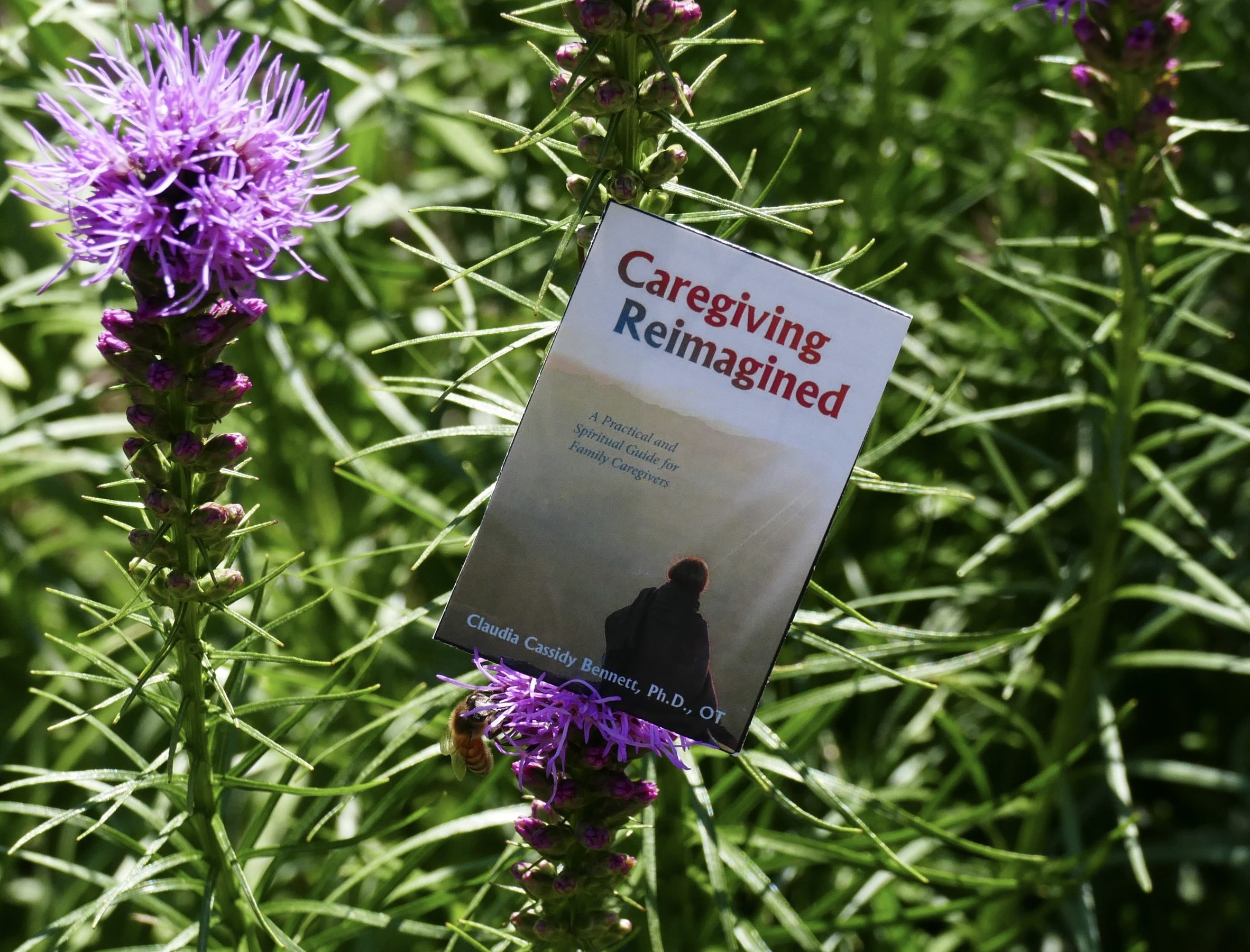
You can find more insights, personal stories, and practical tools to support your caregiving journey in my book, Caregiving Reimagined: A Practical and Spiritual Guide for Family Caregivers.
Do you have a story you’d like to share? Leave me a message. I’d love to hear from you.
I’m here for you with care and compassion,
Claudia